
INTEGRATED REPORT 2019
Efficiency – South Africa |
 |
|
| We are committed to delivering high-quality care supported by high levels of clinical and operational efficiency. To achieve this, we focus on optimally allocating our resources, while maintaining relationships with our employees, healthcare funders, procurement partners and doctors. |

| OUR 2019 PRIORITIES | OUR PROGRESS | |
Creation of an automated iShift project library, with access to shared learnings |
|
|
Clinical directorate to continue with engagement of doctors |
|
|
Engage funders to improve efficiency and reduce cost of delivery |
|
|
Global procurement initiative |
|
|
Renewed focus on managing our cost of sales, as well as our overall procurement |
|
| OUR 2020 PRIORITIES |
|
Clinical efficiency
Globally, healthcare systems remain challenged by the unsustainable increases in the cost of healthcare delivery. As an industry leader, Life Healthcare recognises its responsibility to be at the forefront of change by providing affordable healthcare to the communities it serves. Therefore, this year we refreshed our focus on sustainability and providing excellent, cost-effective care to our patients.
Driving clinical efficiency within Life Healthcare by engaging with doctors remains a key priority. We also continue to focus on our relationships with our employees, healthcare funders and procurement partners to respond to efficiency-enabling opportunities. Furthermore, engagements with these stakeholders allow us to enhance our clinical capacity within the business. Our latest initiative, critical care re-engineered, introduced evidence-based ICU protocols in eight hospitals. In parallel, we developed a clinical outcomes dashboard.
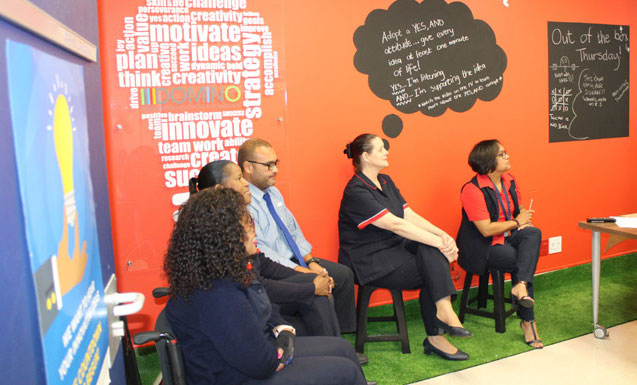
Our iShift programme continued to drive efficiency throughout the business by creating a culture of innovation, empowering our employees at every level to identify problems and, importantly, possible solutions.
At a Group level, we identified and investigated areas where we could significantly improve our utilisation and clinical efficiency. Subsequently, we distributed all relevant information to our hospitals, which implemented changes aimed at driving the sustainable use of products and, in correlation, lowering the cost of care.
Patient safety remains our top priority, with a strong focus on quality, clinical excellence and efficiency. We encourage our employees to come forward with new ideas on how to improve our business. We are also working closely with doctors to collectively find innovative solutions to reduce waste and ensure sustainable, cost-effective patient care.
While our renewed focus is challenging and requires multi-functional participation, we are starting to make significant inroads in containing costs and improving efficiencies across our southern African business.
Procurement
Our approach to procurement is an important part of ensuring we manage costs and drive efficiencies in the business. During 2019, we merged our two procurement departments, being pharmaceutical and non-pharmaceutical, with our IT, construction and engineering sourcing abilities.
Partnerships with our vendors continue to be a critical lever in achieving efficiencies within the business. We are exposed to external pressures such as volatile exchange rates and increases in services costs. In response, we adopted bold and creative approaches outside of the traditional tender process to mitigate the impact of these pressures on our business. For example, during the year we implemented an alternative contracting model, such as bundling of service contracts to a single service provider.
We spent a total of R9.5 billion (2018: R9.3 billion) on procurement, with R4.5 billion (2018: R4.3 billion) relating to pharmaceutical products and R2.6 billion (2018: R3.6 billion) on equipment, services, IT and consumables. Altogether, 60% of the total procurement spend continues to be exposed to exchange rate volatility.
In 2019, a number of key projects focusing on improving efficiencies, as well as reducing our impact on the environment, were piloted and implemented across the business. Two such procurement-driven projects include the containerisation of surgical instrumentation and large volume parenteral recycling projects.
Preferential procurement
We continue to look at alternative strategies to improve our preferential procurement levels, including the roll-out of department scorecards to assist the business to focus on areas for improvement and considering vendors’ B-BBEE status as a critical criterion for awarding tenders. These actions have contributed to a positive preferential procurement spend with level 1 to 3 vendors.
| Level (%) | 2019 | 2018 | 2017 | ||||
| Level 1 to 3 broad-based black economic empowerment (B-BBEE) spend | 37 | 31 | 19 | ||||
|---|---|---|---|---|---|---|---|
| Level 4 to 6 B-BBEE spend | 20 | 20 | 42 | ||||
| Level 7 and 8 spend | 14 | 17 | 10 | ||||
| Non-B-BBEE spend | 24 | 28 | 26 | ||||
| Exempt | 4 | 4 | 3 | ||||
Information technology
Life Healthcare remains committed to effective IT management. We understand that to remain relevant, we need to be cognisant of technological innovations and the potential impacts on healthcare, hospital management and patient outcomes.
IT governance
From an operational perspective, we manage our IT performance on a daily basis and capture our observations in monthly reports. These reports reflect our capacity, availability, performance and security, and assist us to appropriately manage our IT security, software and infrastructure capabilities.
Incidents with the highest potential impact on our business are prioritised. Specifically, those matters that pose a threat to our IT security systems are promptly resolved. These high priority or high impact risks are monitored monthly by the Information Security Management System (ISMS) and IT management forums, and by the IT steering committee and risk committee every quarter. Other incidents are addressed and tracked in daily sessions, and escalated if required.
IT focus in 2019
In 2019, we focused on maturing our IT capabilities – specifically legislative compliance, data privacy, security, personal information, and risk management – to align ourselves with King IV. We ensured that our IT goals align with the Group strategy, and therefore introduced a digital strategy to transform the way we approach IT within the business.
We also adopted a security framework and additional systems, controls and hardware to enhance our protection against cyber threats and to safeguard personal information. We will continue to update the security and preventative measures in place as legislation changes or cyber threats evolve.
The expertise of our IT steering committee was bolstered during the year and now includes representatives from our business, operations, governance, risk, audit and compliance functions. The steering committee monitors trends, risks, opportunities and strategic projects through a global lens.
We completed a comprehensive IT risk re-assessment, focusing on business, audit, risk, privacy, as well as IT operations, security and governance. We reviewed, identified, classified, categorised, scored and prioritised the various risks. Furthermore, controls were reviewed for effectiveness, and treatment and ownership were assigned based on the level of risk.
 IT focus in 2020
Going forward, the Group will continue its IT strategic projects and governance maturity to develop and improve local competencies and effectiveness. Our focus areas for 2020 will be on governance, risk, business continuity, compliance, supplier management, incident management and cybersecurity improvements.
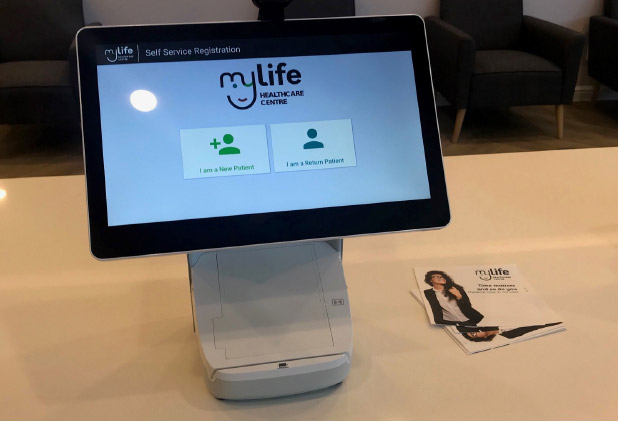
Through the Group IT steering committee, we aim to embed our newly developed digital strategy throughout the business. Furthermore, we aim to establish a Group-wide enterprise architecture capability to standardise and rationalise systems. We will further introduce a new system to classify, categorise, monitor, track and manage service events and incidents. This will increase oversight over vendors and suppliers and allow us to review service level metrics and measurements to identify improvements or efficiencies.
Our strategic projects in 2020 will focus on:
- infrastructure modernisation: optimising or improving connectivity and collaboration;
- core system modernisation: increased efficiencies for the business;
- privacy: ensuring incoming data security, as well as implementation and improvement of privacy compliance and controls; and
- cloud migration: creating scalable technical solutions to improve overall operational efficiencies.