Currently viewing: Our operating environment / Next: Our material matters
As we progress towards our vision of being an international, healthcare provider delivering measurable clinical quality through a diversified offering and people-centred approach, we have to traverse a complex and changing healthcare landscape. This landscape is impacted by global macro-economic events and trends which can affect our operations and ability to create value. This external operating context impacts our profitability, business continuity, risk management and also informs the decisions we make on our strategy.

WHAT HAPPENED
OUTLOOK
COVID-19
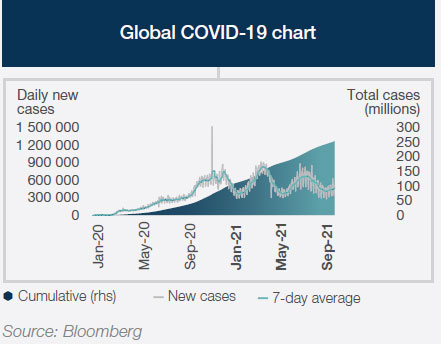
Through a combination of herd immunity and mass vaccinations we will learn and adapt to live with COVID-19 and further waves of infection, much like we do with influenza viruses. Annual booster vaccinations may become routine particularly if additional viral variants emerge.
Supply chains will normalise and demand for routine healthcare services will return. In some cases, pent-up demand may lead to a spike in activity. In some cases delayed healthcare treatment may lead to more severe illness with poorer outcomes.
Global economy
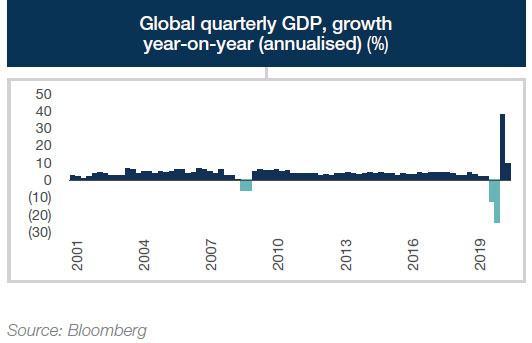
Mass vaccination roll-outs across the globe since early 2021 have improved global sentiment, seen reduced work-from-home activity and a resumption in international travel. Many global activities are likely to return to pre-COVID-19 levels during 2022 in the absence of further COVID-19 waves and the impact of any intermittent lockdowns driven by new variants.
Exchange rates
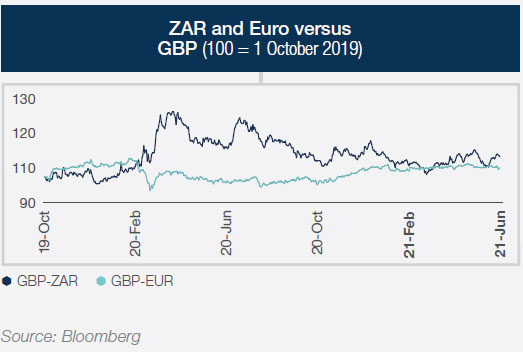
The outlook for our volatile currency depends on inflation expectations globally and how central banks respond to this.
It is possible that we see further Rand weakness given the relatively weaker growth trajectory that South Africa is forecast to have. Fiscal stabilisation and a continued commodities boom could lead to a strengthening of the currency.
Innovation
Digital innovation in healthcare will continue. It should become an enabler for better healthcare access (through virtual consultations and remote monitoring), record keeping (electronic health records) and research (analytics and big data).

Our stakeholders
When assessing business risks and opportunities we must be cognisant of the operating environment we choose to be part of, the risks and opportunities inherent in the market, while also weighing up our relative strengths and capabilities to compete in the target market. Several key stakeholders (depicted below) shape our operating environment and contribute to our ability to deliver services across our business.
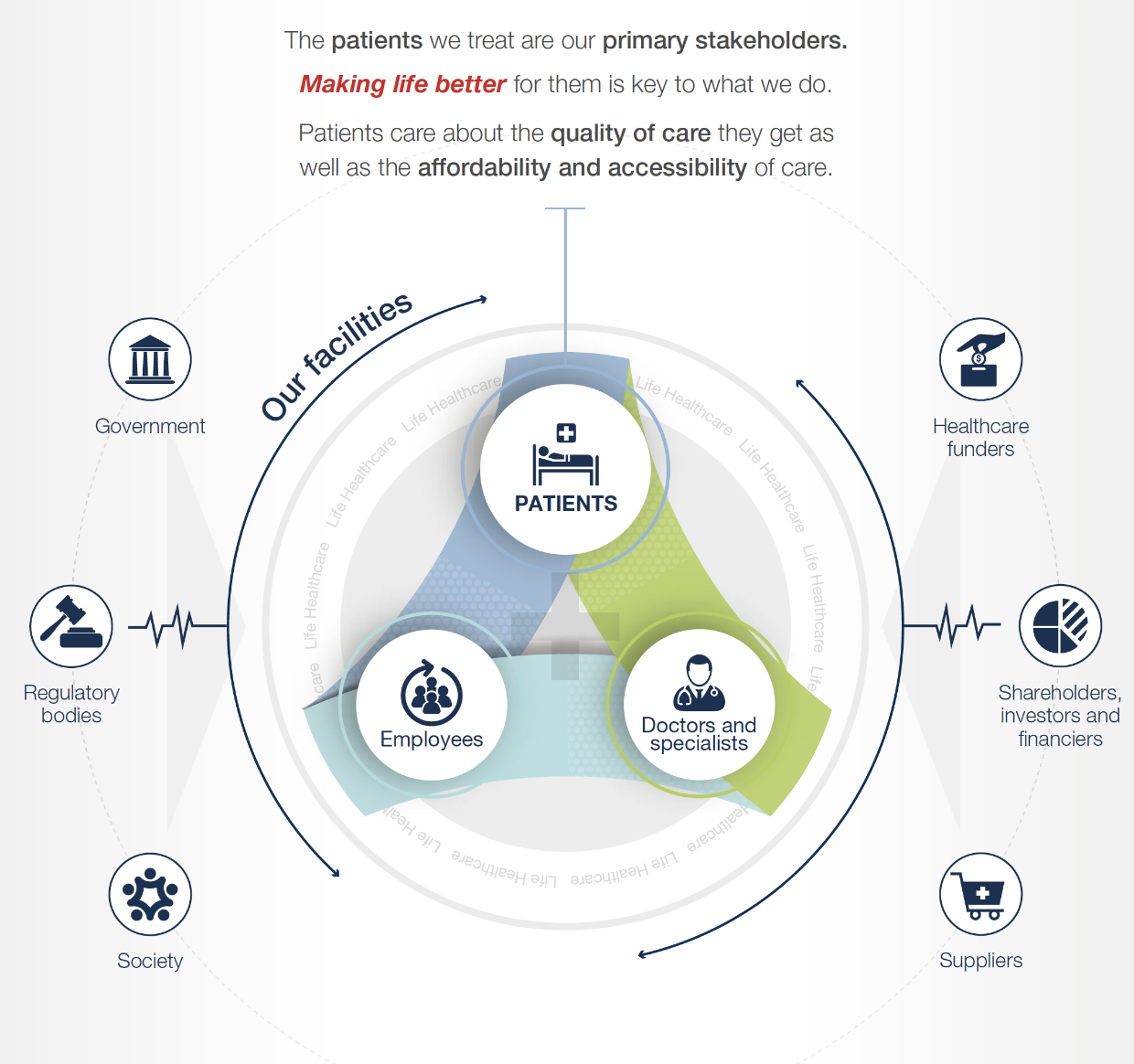
To achieve our purpose of Making life better for our patients, we also interact with and are dependent on several other important stakeholders, as discussed below.
| STAKEHOLDER | Links to material matters |
Links to key risks |
||
 |
Healthcare is a heavily regulated sector world-wide. These regulations, from national governments or from professional or other regulatory bodies, define what we can and can't do from a healthcare provision perspective. As a consequence of regulations, different healthcare models are employed around the world. In South Africa, competition regulations limit our ability to grow by acquisition in the acute hospital space due to our relative market share. In addition, we are largely not allowed to employ medical specialists, and there are restrictions on our ability to provide fully accredited undergraduate training for nurses and doctors despite shortages of these skills in South Africa. . |
 |
|
|
 |
Governments, and their regulations, are essentially a reflection of the values, beliefs and aspirations of society. Society plays a role in holding governments and businesses accountable for their actions. We are serious about corporate responsibility, which is embodied by our commitment to ethical and sustainable behaviour. We discuss these commitments within our governance overview and Social, Ethics and Transformation section. |
 |
|
|
 |
Our employees are critical to the delivery of our services. Our ability to employ and retain talented and passionate employees is a key component of delivering consistent high-quality care. Shortages of nurses globally have led us to invest in training in SA nurses through our own nursing college (Life College of Learning). However, regulatory restrictions related to accreditation of independent training colleges hampers our ability to train fully registered nursing employees. |
 |
|
|
 |
Doctors and specialists are critical to our healthcare services delivery. In many countries we operate in we either do not, or are not allowed to, employ doctors and specialists. They act as consulting partners with access to our facilities and have rights to carry out procedures and admit patients within our facilities. Shortages of doctors globally, our inability to do accredited medical school training of doctors, and our inability to employ them directly within South Africa, present challenges in terms of the sustainability of our operations, our ability to expand across the continuum of care, and our aspirations to implement value-based care across our business. |
|
|
|
 |
Healthcare funders are important stakeholders as we receive much of our remuneration directly from them. In southern Africa our services are mostly funded through private medical insurance coverage and occasionally through direct out-of-pocket payments or publicly funded schemes (such as the Road Accident Fund). In the United Kingdom and Europe most of our services are funded by national healthcare services and a small component from private sector funding. |
 |
|
|
 |
Shareholders, investors and financiers provide the equity and debt capital we rely on to fund our businesses and growth aspirations. |
 |
|
|
 |
Our suppliers deliver the consumables, drugs, equipment and food we utilise during the provision of our services. We also rely on utilities to supply us with water, electricity and other municipal services. Reliability of our supply chain and utilities is crucial to the sustainability of our services. |
 |
|
|